What is Sternberg's Triangular Theory of Love? (Complete Guide for Modern Dating)
Deep dive into Sternberg's framework of intimacy, passion, and commitment. Understand the 7 types of love, how the theory applies to early dating stages, and learn to assess these components in your own connections.

ForReal Team
Author
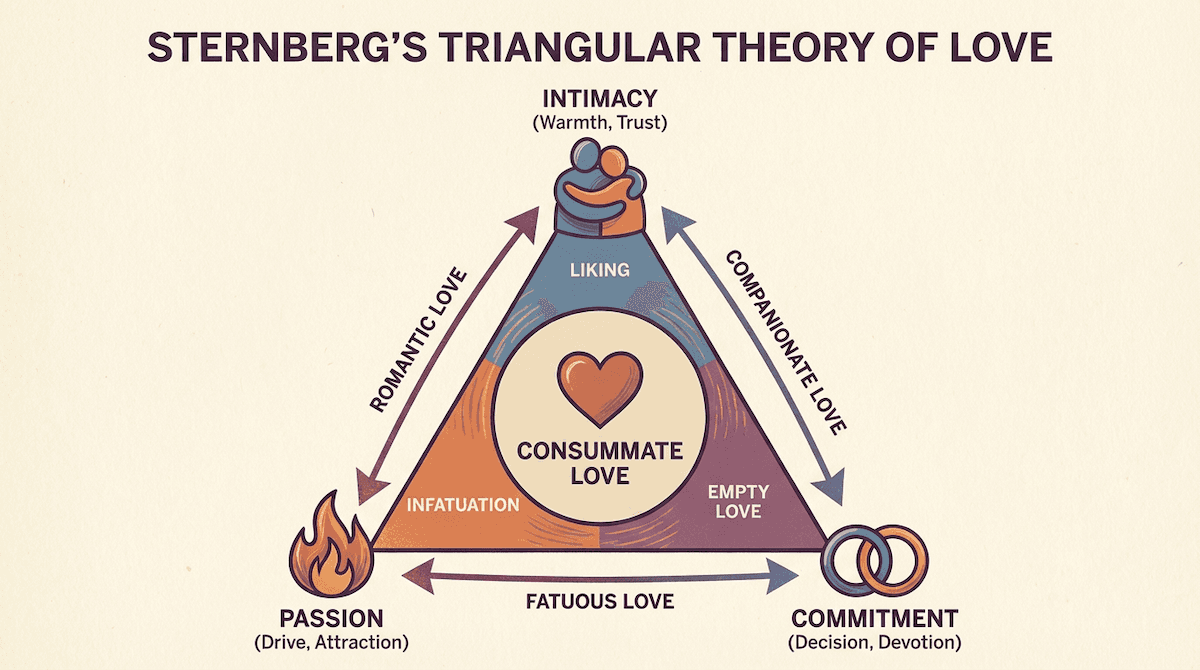
Sternberg's Triangular Theory of Love is a psychological framework that breaks down love into three core components: intimacy, passion, and commitment. According to psychologist Robert Sternberg, these three elements combine in different ways to create seven distinct types of love—from infatuation to consummate love. Understanding this theory can help you assess where your dating connections stand, recognize what might be missing, and make more informed decisions about relationship potential. In this complete guide, we'll explore each component, explain all 7 types of love, and show you how to apply this framework to modern dating situations.
The Three Components of Love
Sternberg's theory is built on three fundamental components that can exist independently or combine in various ways:
Intimacy: The emotional component of love. This includes feelings of closeness, connectedness, and bondedness. Intimacy involves sharing personal thoughts, feelings, and experiences with another person. It's about feeling understood, supported, and emotionally safe.
Passion: The motivational component driven by physical attraction, sexual desire, and romantic feelings. Passion is what creates the 'spark' or 'chemistry' in relationships. It's the intense emotional and physical attraction that often characterizes early dating stages.
Commitment: The cognitive component involving the decision to love someone and maintain that love over time. Commitment includes both short-term decisions (choosing to be with someone) and long-term decisions (maintaining the relationship through challenges).
These three components can exist in different combinations, creating various types of love experiences.
The 7 Types of Love
By combining the three components in different ways, Sternberg identified seven distinct types of love:
Liking (Intimacy Only)
This is friendship without passion or commitment. You feel close, connected, and comfortable with someone, but there's no romantic or sexual attraction, and no commitment to a relationship. This is the foundation of many strong relationships but isn't romantic love on its own.
Infatuation (Passion Only)
Pure passion without intimacy or commitment. This is the 'love at first sight' experience—intense physical attraction and romantic feelings, but no deep emotional connection or commitment yet. Infatuation is common in early dating stages and can feel overwhelming, but it often fades without developing intimacy or commitment.
Empty Love (Commitment Only)
Commitment without intimacy or passion. This describes relationships that continue out of obligation or habit rather than emotional connection or attraction. Empty love can occur in long-term relationships where intimacy and passion have faded, or in arranged marriages where commitment exists without the other components.
Romantic Love (Intimacy + Passion)
The combination of intimacy and passion without commitment. This is the 'honeymoon phase' of relationships—deep emotional connection and strong physical attraction, but no long-term commitment yet. Romantic love is common in early dating stages and can be intense and exciting, but it may not last without commitment developing.
Companionate Love (Intimacy + Commitment)
Intimacy and commitment without passion. This describes deep friendships that have evolved into committed relationships, or long-term partnerships where passion has faded but emotional closeness and commitment remain strong. Many successful long-term relationships transition from romantic love to companionate love over time.
Fatuous Love (Passion + Commitment)
Passion and commitment without intimacy. This occurs when people make quick commitments based on intense attraction before developing deep emotional connection. Think whirlwind romances or quick marriages—there's passion and commitment, but the relationship may struggle because intimacy hasn't been established.
Consummate Love (Intimacy + Passion + Commitment)
The complete form of love with all three components. This is often considered the ideal type of love—deep emotional connection, strong physical attraction, and lasting commitment. However, even consummate love requires ongoing effort to maintain all three components, as relationships can shift between types over time.
How the Theory Applies to Early Dating Stages
Understanding Sternberg's theory can help you navigate the early stages of dating more effectively:
First Dates (0-2 weeks): Most connections start with Infatuation—strong physical attraction and romantic feelings, but limited intimacy or commitment. This is normal and healthy. The key is recognizing that infatuation alone isn't enough for a lasting relationship.
Early Dating (2-8 weeks): As you spend more time together, Romantic Love often develops—intimacy grows alongside passion. You're building emotional connection while maintaining physical attraction. This stage is crucial for determining long-term potential.
Defining the Relationship (2-6 months): This is when Commitment typically enters the picture. You're deciding whether to make the relationship official and exclusive. Ideally, you're moving toward Consummate Love with all three components present.
Long-Term Relationships: Over time, relationships may shift between types. Passion might fade, leading to Companionate Love. Or commitment might weaken, returning to Romantic Love. Understanding these shifts can help you address what's missing and work to restore balance.
Assessing Your Connection
Ask yourself: Which components are present? Is there intimacy (emotional closeness)? Passion (physical attraction)? Commitment (decision to be together)? Recognizing what's present and what's missing can help you understand where your relationship stands and what might need attention.
Identifying Red Flags
If you're experiencing **Fatuous Love** (passion + commitment without intimacy), this might be a red flag. Quick commitments based on attraction alone often struggle when the initial passion fades. Similarly, if you're stuck in **Infatuation** for months without developing intimacy, the relationship may not have long-term potential.
Setting Realistic Expectations
Understanding that **Consummate Love** is rare and requires ongoing work can help you set realistic expectations. Most relationships don't have all three components in perfect balance all the time. What matters is recognizing what's present, what's missing, and whether you're both willing to work on developing the missing components.
Using the Theory to Assess Relationship Potential
You can use Sternberg's framework to evaluate your dating connections:
Check for Intimacy: Are you sharing personal thoughts and feelings? Do you feel emotionally safe and understood? Can you be vulnerable with this person? If not, you may be missing the intimacy component.
Check for Passion: Is there physical attraction and romantic feelings? Do you feel that 'spark' or chemistry? Are you excited to see them? If passion is missing, you might be in Companionate Love territory—which can work, but may not feel like romantic love.
Check for Commitment: Have you both decided to be exclusive? Are you making plans for the future? Are you both invested in making the relationship work? Without commitment, you're likely in Romantic Love or Infatuation—which can be exciting but may not lead to a long-term relationship.
Assess the Balance: The strongest relationships have all three components, but they don't need to be perfectly balanced. What matters is that all three are present to some degree and that you're both working to maintain them.
Common Misconceptions About the Theory
There are several misconceptions about Sternberg's theory that are worth clarifying:
Misconception 1: Consummate Love is Permanent
Even consummate love requires ongoing effort. Relationships can shift between types as circumstances change. Passion might fade during stressful periods, intimacy might deepen over time, or commitment might waver during challenges. The key is recognizing these shifts and working to restore balance.
Misconception 2: All Three Components Must Be Equal
Different relationships have different balances. Some couples have stronger passion, others have deeper intimacy. What matters is that all three components are present and valued, not that they're perfectly equal.
Misconception 3: You Can't Have Love Without All Three
Many successful relationships exist with just two components. Companionate love (intimacy + commitment) can be deeply fulfilling, even without strong passion. The theory helps you understand what type of love you have, not judge whether it's 'real' or 'enough.'
The Theory is Descriptive, Not Prescriptive
Sternberg's theory describes different types of love—it doesn't prescribe what you 'should' have. Understanding what components are present in your relationship can help you make informed decisions, but there's no single 'right' type of love.
Relationships Evolve
The type of love in a relationship can change over time. A relationship that starts as infatuation might develop into romantic love, then consummate love. Or it might shift from consummate love to companionate love as passion naturally decreases. These shifts are normal and don't necessarily indicate problems.
How ForReal Can Help You Understand Your Love Type
If you're trying to understand where your dating connections stand in terms of Sternberg's theory, ForReal can provide objective insights. Our AI analyzes your text conversations and identifies patterns in emotional connection (intimacy), romantic signals (passion), and relationship commitment indicators.
Instead of guessing whether you have intimacy, passion, or commitment, ForReal helps you see the bigger picture: Are your conversations building emotional closeness? Are there clear romantic signals? Is there evidence of commitment or future-oriented thinking?
This data-driven approach can help you assess which components of love are present in your connections and make more informed decisions about relationship potential. Download ForReal now to gain clarity on your dating connections and understand where they stand in terms of intimacy, passion, and commitment.
Frequently Asked Questions
Can a relationship work with only two components of love?
Yes, many successful relationships exist with just two components. Companionate love (intimacy + commitment) is common in long-term relationships where passion has naturally decreased. However, relationships with only passion and commitment (fatuous love) often struggle because intimacy is crucial for long-term success.
How long does it take to develop all three components?
There's no set timeline. Intimacy typically develops over weeks to months as you share experiences and build trust. Passion can be immediate or develop over time. Commitment usually comes after intimacy and passion are established, often around 2-6 months in modern dating. However, every relationship is different.
Is infatuation bad for relationships?
No, infatuation isn't bad—it's a normal part of early dating. The issue arises when infatuation doesn't develop into something deeper. If you're still in pure infatuation (passion only) after several months without developing intimacy or commitment, the relationship may not have long-term potential.
Can you move from empty love back to consummate love?
Yes, but it requires intentional effort from both partners. If a relationship has lost intimacy and passion but maintains commitment, couples can work to rebuild emotional connection and rekindle physical attraction. This often requires open communication, couples therapy, or relationship coaching.
How do I know which type of love I'm experiencing?
Assess the three components: Do you feel emotionally close and understood (intimacy)? Is there physical attraction and romantic feelings (passion)? Have you both committed to the relationship (commitment)? The combination of components present determines your love type. If you're unsure, ForReal can help analyze your communication patterns to identify which components are present.
Is consummate love realistic for most relationships?
Consummate love is achievable but requires ongoing effort. Many relationships achieve it temporarily or in cycles. What's more realistic is having all three components present to some degree, with the understanding that their intensity may fluctuate over time. The goal isn't perfect balance, but rather having all three components valued and maintained.
Sternberg's Triangular Theory of Love provides a valuable framework for understanding your dating connections. By recognizing which components—intimacy, passion, and commitment—are present in your relationships, you can make more informed decisions about relationship potential and identify what might need attention. Remember: there's no single 'right' type of love, but understanding what you have can help you navigate your dating journey with greater clarity and confidence.
Want to understand which components of love are present in your dating connections?
Download ForReal